Pharma & Financial Services · ~8 years

Data Scientist

Shipping production ML, agentic AI, and grounded RAG for regulated industries.

~8 years building data systems across pharma compliance at Amgen and financial services risk at American Express. Both regulated industries. Both demand interpretability and rigorous evaluation.

Three end-to-end portfolio projects — a clinical-trial RAG system with agentic Corrective-RAG and a cross-encoder reranker, a patient risk stratification pipeline with causal inference and survival analysis deployed live on AWS Lambda, and a pharma compliance spend analytics system on 16M+ CMS Open Payments records across Pandas, Snowflake, and PySpark.

~8
Years across
pharma & finance
3
End-to-end
projects live
65+
Countries
risk-scored
16M+
CMS records
analyzed

Eight years inside regulated industries.

I'm a Data Scientist with ~8 years of work across pharma and financial services. At Amgen (2022–2026), I architected the Python ETL behind the company's CMS Open Payments federal submission (~475K records, ~$241M annually), built a multivariate country risk scoring system across 65+ countries presented to Directors and Executive Directors, and led an NLP initiative that cut manual document categorization by 25%. At American Express via Atos Syntel (2016–2019), I built risk scoring pipelines on 10M+ transactions and the team's A/B testing framework that ran 12+ cycles per year for two years.

My work has always lived inside regulated industries where explainability matters more than fluency. A model that can't be defended to a regulator doesn't ship. A score that can't be traced to a feature doesn't get used. Those constraints are why I lean into causal inference, rigorous evaluation, and audit-defensible methodology — not the slowest path, just the only one that survives contact with production in healthcare and finance.

I'm targeting Data Scientist, ML Engineer, and AI Engineer roles where production ML, agentic AI, and rigorous evaluation matter. Open to remote, hybrid, or onsite for the right opportunity. US citizen — no sponsorship required. If your team works on hard problems in regulated industries — or just wants to ship ML that holds up — I'd love to talk.

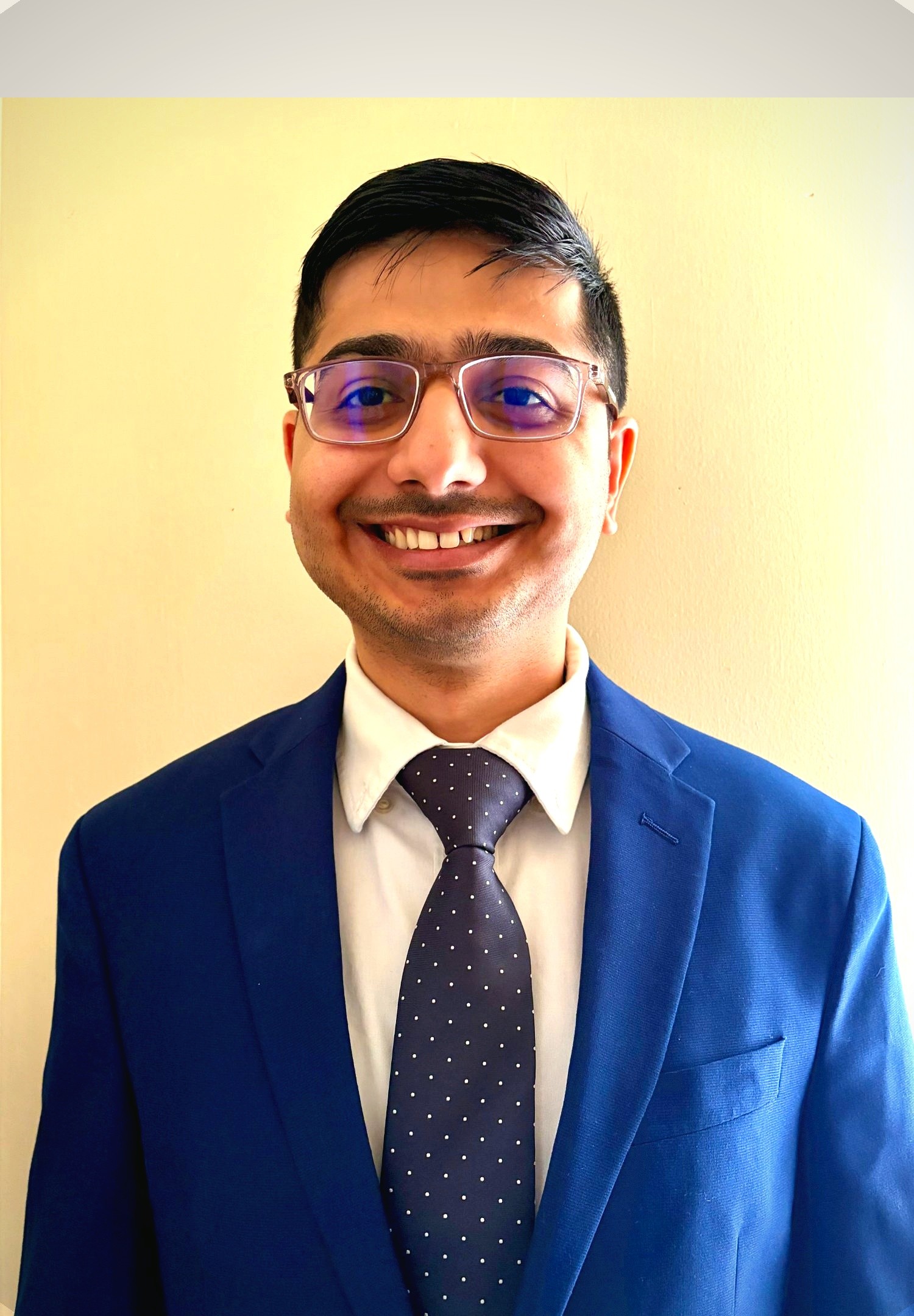
Shrikant Sharma

Four principles in every project I've shipped.

Principle 01

Test on your domain before you trust the benchmark.

The biggest unlock in my Clinical Trial RAG project was switching from MiniLM to PubMedBERT — not because the leaderboards said so, but because MiniLM scored pembrolizumab vs Keytruda (same drug, brand vs generic) at 0.24 cosine similarity. Same drug, treated as unrelated. Pick five domain synonym pairs and check cosine. Most leaderboard wins die in production for this exact reason.

Principle 02

Defense in depth beats single-point precision.

My RAG system runs three independent refusal gates: similarity threshold, LLM-as-judge document grader, and a generation-prompt refusal phrase. Each gate is allowed to be lenient because the composite is strict. Catastrophic out-of-domain queries fail at gate one; topically-adjacent-but-irrelevant queries (the 0.91 cosine adversarial cases threshold alone misses) fail at gate two; insufficient context fails at gate three.

Principle 03

Library defaults aren't methodology.

My patient risk stratification project includes a causal inference layer on the NHEFS smoking-cessation cohort. The DoWhy library default produced +2.04 kg vs the Hernán-Robins reference of +3.4 kg — a 40% bias. Rebuilding per the methodology spec (quadratic confounder terms, logit propensity model, 1:1 nearest-neighbor matching with a 0.2 SD caliper, without replacement) put my estimate within 0.2 kg of reference. Three-way convergence with G-computation and IPW confirmed it.

Principle 04

The platform isn't the product, but the platform matters.

My pharma compliance project runs the same feature pipeline across Pandas, Snowflake, and PySpark with row-level equivalence verified. Real ML systems migrate across platforms as they scale. Proving the architecture survives that migration is part of the design, not an afterthought.

Three end-to-end systems, all live.

Project 01 · Clinical AI

Clinical Trial Intelligence System

Agentic RAG with a cross-encoder reranker for oncology trial Q&A.

A natural-language interface over 484 ClinicalTrials.gov oncology trials (3,264 chunks). PubMedBERT for domain embeddings, FAISS for similarity search, Groq Llama 3.3 70B for generation. Three architectural iterations: baseline RAG → agentic Corrective-RAG via LangGraph (LLM-as-judge document grading, query rewriting, bounded retries) → cross-encoder reranker (MS-MARCO MiniLM-L-6-v2) that halved in-corpus refusal rate from 67% to 33% on a 6-query LLM-judged evaluation. Three refusal gates for safety. Graceful rate-limit error handling on the live demo.

StackPython · LangGraph · Sentence Transformers · PubMedBERT · Cross-Encoder · FAISS · Groq Llama 3.3 70B · RAGAS · Streamlit
Project 02 · Clinical ML & Causal

Patient Risk Stratification Pipeline

Production XGBoost + causal inference + survival analysis, deployed live on AWS Lambda.

End-to-end ML pipeline on the UCI Heart Disease dataset (303 patients, 13 clinical features). MLflow-tracked comparison across 5 model families surfaced XGBoost at 0.95 AUC, 0.93 recall at the clinical operating threshold, Brier 0.092 with documented calibration analysis. SHAP TreeExplainer for population and per-prediction explainability. Phase 2 extension to causal inference and survival analysis on the NHEFS cohort: propensity score matching + G-computation with DoWhy showed three-way convergence within 0.2 kg of the Hernán-Robins reference; Cox PH and Random Survival Forest at 0.80 concordance revealed pure age confounding behind a significant unadjusted log-rank. Deployed as a REST API on AWS Lambda via ECR + Mangum with FastAPI Swagger docs.

StackPython · Scikit-learn · XGBoost · PyTorch · SHAP · DoWhy · lifelines · scikit-survival · MLflow · FastAPI · Docker · AWS Lambda + ECR
Project 03 · Compliance Analytics

Pharma Compliance Spend Analytics

Anomaly detection on 16M+ real CMS Open Payments records, ported across three compute backends.

Real CMS Open Payments data — 16M+ records, $13B in payments. Sampled to 989K transactions across 289K healthcare providers for iteration speed. Five HCP-level features. Two-detector anomaly layer (within-specialty z-scores + global IQR with $500 monetary floor) plus an Isolation Forest ML layer on top. Rules-vs-ML reconciliation surfaced three compliance archetypes no single method catches alone — captured specialists, generalists, industry consultants. Same feature pipeline ported across Pandas (laptop), Snowflake (5 SQL queries reproducing EDA), and PySpark (DataFrame + Spark SQL) with row-level equivalence verified. Surfaced finding on real federal data: the top 4 device manufacturers — Arthrex, Stryker, Zimmer Biomet, Smith+Nephew — capture 59.7% of orthopedic surgery payments.

StackPython · Pandas · Scikit-learn · PySpark · Snowflake · Tableau

Pharma and finance, end to end.

Sept 2022 — May 2026 · Pharma, Compliance Analytics

Amgen

Data Scientist

Architected the CMS Open Payments federal submission ETL (~475K records, ~$241M annually) on AWS + Databricks. Built multivariate country risk scoring across 65+ countries presented to Directors and Executive Directors; surfaced 3 high-risk markets undetected by the prior model. Developed statistical flagging across 5 transaction-monitoring processes. Led the team's NLP/GenAI exploration; cut manual document categorization by 25%. Owned end-to-end knowledge transfer of three concurrent workflows during the offshoring transition.

Jan 2022 — May 2022 · Internship

Nugget.ai

Data Scientist Intern

Built ML classification models that improved baseline matching accuracy by 15%. Engineered 20+ features across structural, linguistic, behavioral, and content-based categories.

Feb 2018 — Dec 2019 · Financial Services, Risk Modeling

Atos Syntel — at American Express

Data Scientist

Built risk scoring pipelines on 10M+ transactions covering spending velocity, geographic anomalies, behavioral segmentation. Implemented the team's A/B testing framework — sample sizing, randomization, multiple-testing correction, SRM validation — across 12+ cycles per year for two years. Executive Tableau dashboards consolidating 5+ source systems that informed $2M+ in risk decisions.

Mar 2016 — Jan 2018

Atos Syntel — at American Express

Data Analyst

Production SQL workflows processing 5M+ transactions monthly with 99.5% accuracy. Automated weekly and monthly portfolio reporting, freeing 30+ hours/month of manual analyst time.

Education

May 2022
M.S. Data Analytics
Clark University
Feb 2016
B.E. Electronics and Telecommunication Engineering
Sant Gadge Baba Amravati University

Let's talk.

If your team is hiring — or if you want to compare notes on agentic RAG, causal inference, or shipping ML in regulated industries — reach out.